
.png)
Understanding Cellulite: What Causes the Dreaded Dimples on Your Skin. Let’s dive in at Natural Lash Skin Bar in Northville MI

Cellulite affects nearly 90% of women worldwide, yet many still wonder what exactly causes those stubborn dimples on the skin. Before exploring treatments or remedies, it’s essential to understand what cellulite really is and why it appears. This knowledge helps set realistic expectations and guides effective care.
What Is Cellulite?
Cellulite is a common skin condition characterized by a dimpled or lumpy texture, often described as an "orange peel" or "cottage cheese" appearance. It typically shows up on the thighs, hips, buttocks, and abdomen. Unlike regular fat deposits, cellulite forms when fat cells enlarge and push against the skin while connective tissue pulls downward, creating uneven surfaces.
The process involves two main factors:
Fat storage in adipocytes: Fat cells beneath the skin grow larger as they store excess fat.
Water retention: Fluid buildup in the tissues adds to swelling and pressure.
As fat cells expand, the connective tissue fibers called septa, which hold fat cells in place, pull on the skin surface. This tension causes the skin to pucker and form visible dimples. At the same time, poor circulation in the area can trap toxins, worsening the appearance.
Why Do Women Have More Cellulite Than Men?
The difference in cellulite prevalence between women and men is striking: about 90% of women experience cellulite, compared to only 10% of men. Two main reasons explain this gap: hormonal differences and skin structure.
Hormonal Differences
Estrogen, the primary female sex hormone, plays a significant role in cellulite development. Higher estrogen levels can weaken collagen and connective tissue, making it easier for fat cells to push through and create dimples. Estrogen also influences fat distribution, often concentrating fat in areas prone to cellulite.
During hormonal changes such as puberty, pregnancy, or menopause, fluctuations in estrogen can increase cellulite visibility. This explains why cellulite often becomes more noticeable during these life stages.
Skin Structure Differences
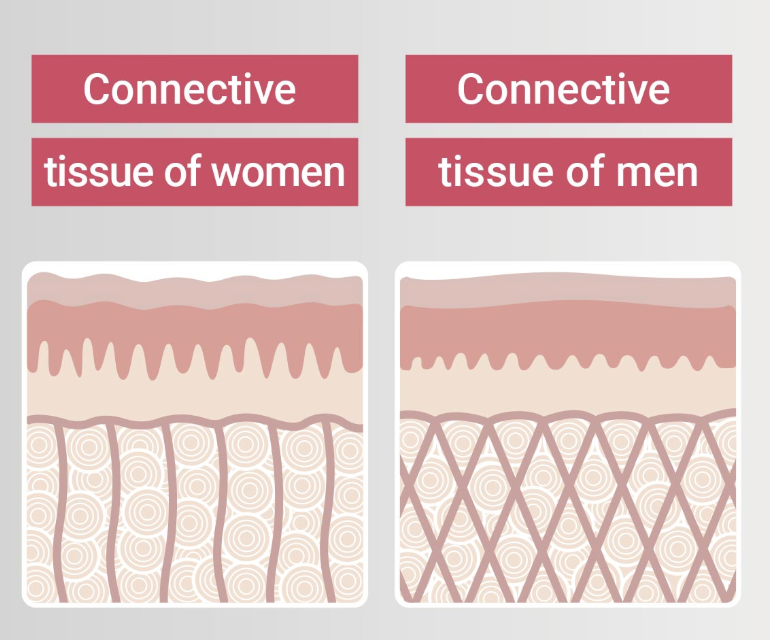
The arrangement of connective tissue fibers differs between men and women. Women’s connective tissue fibers run vertically, which allows fat cells to protrude more easily toward the skin surface. In contrast, men have a criss-cross pattern of fibers, providing stronger support that keeps fat cells more evenly distributed and less visible.
This structural difference means that even with similar fat levels, women’s skin is more likely to show cellulite.

Factors That Influence Cellulite Formation
While hormones and skin structure set the stage, several other factors can influence how cellulite develops and how visible it becomes:
Genetics: Family history affects skin elasticity, fat distribution, and circulation, all of which impact cellulite.
Lifestyle: Poor diet, lack of exercise, smoking, and dehydration can worsen cellulite by reducing circulation and increasing fat storage.
Age: As skin loses elasticity with age, cellulite becomes more apparent.
Weight fluctuations: Gaining and losing weight repeatedly can stretch and weaken connective tissue.
Clothing: Tight clothing that restricts blood flow may contribute to cellulite formation.
Understanding these factors helps in managing cellulite more effectively.
How Cellulite Differs from Fat
It’s important to distinguish cellulite from regular fat. Cellulite is not simply excess fat but a structural issue involving fat cells, connective tissue, and skin. Some people with low body fat still have cellulite, while others with higher fat levels may have less visible cellulite.
This means that losing weight alone may not eliminate cellulite. Instead, improving skin health, circulation, and connective tissue strength plays a crucial role.
Practical Tips to Manage Cellulite Appearance
While no treatment completely removes cellulite, several approaches can reduce its visibility:
Regular exercise: Strength training and cardio improve muscle tone and circulation, which can smooth skin.
Healthy diet: Eating foods rich in antioxidants, staying hydrated, and reducing salt intake help reduce water retention and toxin buildup.
Massage and dry brushing: These stimulate blood flow and lymphatic drainage, temporarily improving skin texture.
Topical creams: Products containing caffeine or retinol may tighten skin and reduce dimpling.
Medical treatments: Procedures like laser therapy, radiofrequency, and acoustic wave therapy target fat cells and connective tissue to improve appearance.
Consistency is key. Combining lifestyle changes with targeted treatments offers the best results.
The Role of Circulation and Toxins
Blocked circulation contributes to cellulite by trapping fluids and toxins in the tissue. This swelling increases pressure on fat cells and connective tissue, worsening the dimpled look. Improving blood flow through exercise, massage, and hydration helps flush out waste products and reduce swelling.
Why Cellulite Is Not a Sign of Poor Health
Cellulite is a cosmetic concern, not a medical condition. It does not indicate poor health or obesity. Many healthy, fit individuals have cellulite due to genetic and structural factors. Accepting cellulite as a normal part of the body’s makeup can reduce stress and unrealistic expectations.
How to Differentiate Cellulite vs. Skin Laxity: The Simple Dimple Test
One practical way to distinguish between cellulite and skin laxity is by using the Simple Dimple Test:
Cellulite: When the skin is gently lifted upward, the dimple remains visible. This is due to fibrous collagen bands tethering the skin down, creating that characteristic uneven texture.
Skin Laxity: When the skin is lifted upward, the area appears smoother. This indicates a lack of structural support rather than tethering, meaning the concern is related to looseness rather than true cellulite.
This distinction is essential, as it helps guide the most effective treatment approach for optimal results.
Summary
Cellulite forms when fat cells enlarge and push against the skin while connective tissue pulls downward, creating a dimpled texture. Women are more prone to cellulite due to hormonal influences and the vertical arrangement of their connective tissue fibers. Factors like genetics, lifestyle, and age also affect cellulite’s appearance.
While cellulite cannot be completely eliminated, improving circulation, skin health, and muscle tone can reduce its visibility. Understanding what cellulite is and why it forms helps set realistic goals and choose effective care strategies.
Let's take steps together to improve skin texture and one of our recommendations in the Medical field is to help with lymphatic drainage and skin laxity.


Comments