
.png)
The Best Time of Year for Laser Resurfacing in Northville, MI
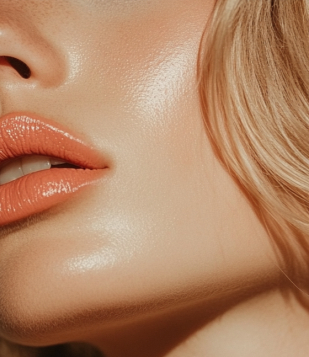
You noticed the texture in a photograph. Or the light in a dressing room caught the fine lines around your mouth in a way your bathroom mirror never does. So you started looking into laser resurfacing, and the first thing you found was that everyone says to wait until fall.
Here's what nobody explains: it isn't about the season. It's about ultraviolet light, and in Michigan the season is just a reliable proxy for how much of it you're going to get.
What actually happens to your skin after resurfacing
Ablative resurfacing removes the outer layer of skin in a controlled way and triggers a wound-healing response underneath. That response is the whole point — it's what rebuilds collagen and smooths texture.
But for several weeks afterward, the new skin at the surface is young, thin, and unusually reactive to UV. Melanocytes, the cells that produce pigment, are also working overtime during healing.
Put those two things together and you get the risk that matters: post-inflammatory hyperpigmentation. Sun exposure on freshly resurfaced skin can leave you with brown patches that are harder to treat than whatever you came in for.
Why fall and winter work in Michigan for Laser Resurfacing
Michigan gives you a genuine seasonal advantage here.
From roughly October through March, the sun sits low, the UV index in southeast Michigan is a fraction of its July peak, and you're wearing more clothing and spending more time indoors. You're simply not accumulating the same exposure.
Compare that to July in Northville, when a walk to your car at noon puts real UV on your face.
You still wear sunscreen in January — that part doesn't change. The difference is that in winter, one forgotten morning isn't a setback.
The other reason: your calendar, not your skin
There's a practical argument that has nothing to do with photobiology.
Ablative resurfacing has real downtime. Depending on depth, you're looking at days of visible redness and peeling, then weeks of pink that makeup covers but doesn't erase. Nobody wants that during beach season, wedding season, or a family reunion.
Fall gives you a quieter stretch. If you're thinking about looking your best for the holidays, working backward from late December means starting now, not in November.
Not sure yet whether resurfacing is even the right treatment for what's bothering you? Book a free skin assessment and we'll tell you honestly — including if the answer is something gentler.
When I'd tell you to wait, even in December
Season isn't the only variable, and I won't treat someone just because the calendar looks good.
I'll ask you to postpone if you've had significant sun exposure or used a self-tanner in the past few weeks. Tanned skin holds more melanin at the surface, and melanin absorbs laser energy in ways that raise the risk of an uneven result.
I'll also postpone for recent isotretinoin use, an active cold sore, or an infection in the treatment area.
And if you're someone who genuinely will not stay out of the sun — some people ski, some people travel south in February — then the season on the calendar isn't the season your skin is actually living in. We plan around your life, not around Michigan's.
What about the rest of the year for Laser Resurfacing?
Summer isn't a hard no. It's a harder yes.
If your schedule only allows a June treatment, we can often do a more superficial depth with a shorter recovery window and a stricter sun protocol. You give up some depth of result in exchange for the timing.
Some concerns are also better addressed with a treatment that has no downtime at all. Redness, rosacea and pigment respond well to the Aerolase Neo Elite, which is a completely different tool for a different job. Resurfacing is for texture — scarring, deep lines, crepey skin. If the two sound similar, this comparison of ablative lasers explains what separates them.
Frequently asked questions
When is the best time of year for laser resurfacing? October through March in Michigan. The reason is low UV exposure during the weeks your skin is healing, not the temperature.
Can I get laser resurfacing in the summer? Yes, usually at a more conservative depth and with a strict sun protocol. You trade some result for the timing.
How long do I need to avoid the sun after laser resurfacing? Plan on diligent daily SPF and minimal direct exposure for at least eight weeks. Longer if you're pigmenting easily.
How far in advance should I book before an event? For a full-face treatment, give yourself a minimum of six to eight weeks before anything photographed. More if you want to be fully settled.
Is laser resurfacing safe for darker skin tones? Lower risk is not no risk. Skin type affects both the protocol and the depth we'd choose, and that conversation happens at your assessment before anything is scheduled.
If fall is when you've decided to finally deal with the texture, scarring or lines you've been noticing, the window is open now through March.
Natural Lash Skin Bar is in downtown Northville, MI, serving Northville, Novi, Plymouth, Canton and Livonia. Your assessment is free, it's a real conversation about what your skin needs, and there's no obligation to book anything on the day.
Learn more about laser skin resurfacing and what it treats.

Comments